Solar energy
String inverters vs microinverters: which one belongs on your roof
What the inverter does, how string, optimizer and microinverter setups handle shade, the warranty each carries (Enphase, SolarEdge) and why it's the part you'll replace.
Written by Yorgan Rojo · Energy advisor, My Home SolutionsUpdated 8 min read
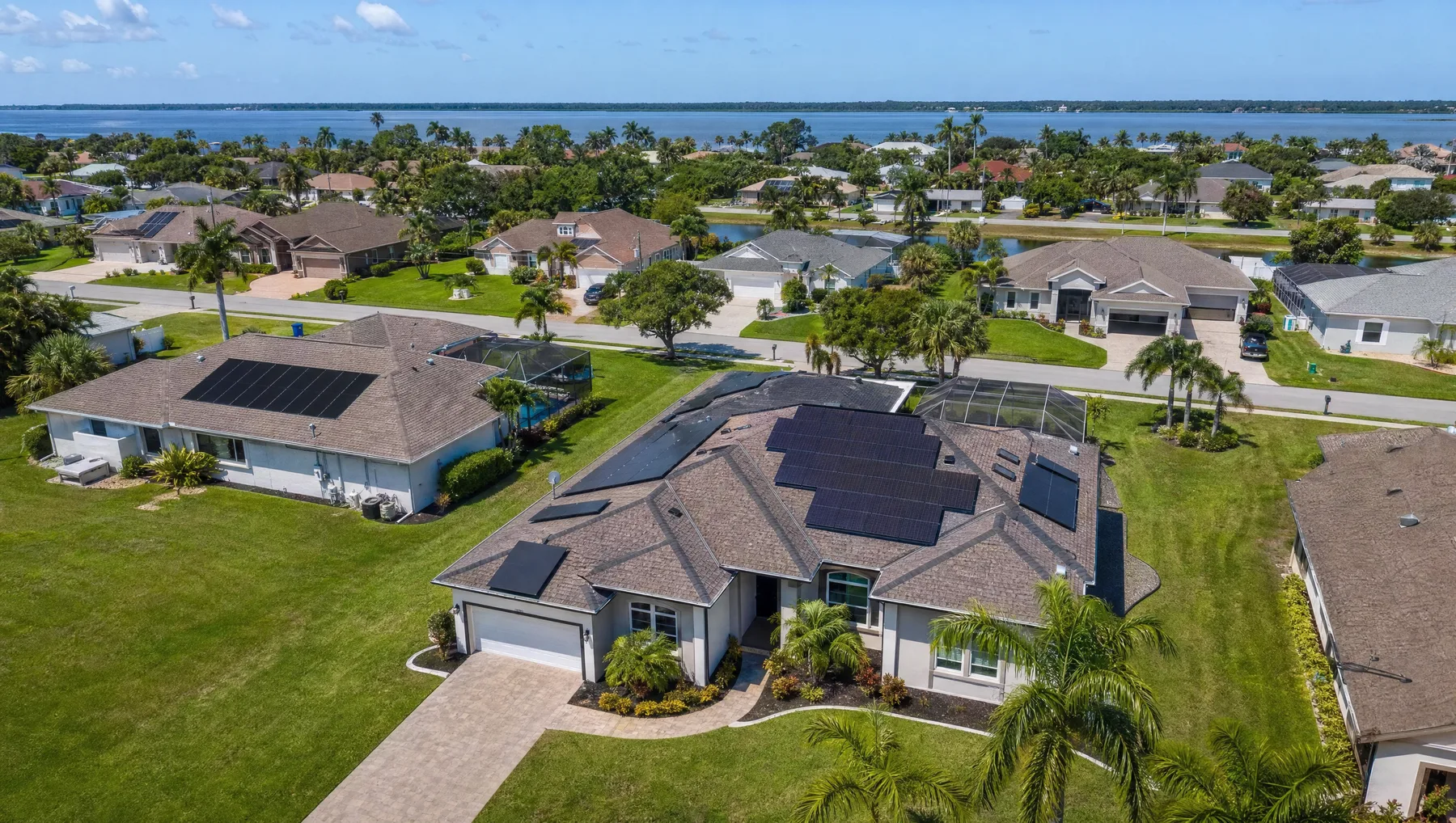
In Florida, if your roof has partial shade, multiple orientations, or you want to know what every panel is doing, microinverters or optimizers are the better choice; if your roof is simple, unshaded and you want the lowest price, a string inverter works. The real difference is not first-year production but what happens in year 12, when the string inverter reaches the end of its life and the microinverter is still under warranty.
What does the inverter do and why does it matter so much?
It converts the direct current (DC) the panels produce into alternating current (AC), which is what your home uses and what the grid accepts. Without an inverter there is no usable electricity. It is also the system’s brain: it decides how much to pull from the panels, shuts down for safety when the grid drops, and feeds the monitoring app.
It is the part that gets replaced most. Panels last 25 years or more; a string inverter lasts 10-15 years per EnergySage. That means in a string system, somewhere between year 10 and 15, you will pay for a replacement. Angi reports $350 to $3,500 for the unit depending on type and size, plus labor. Almost no proposal mentions it.
What are the three architectures?
Three, and they differ by where the conversion happens and how each panel is treated.
| String inverter | String + optimizers (SolarEdge) | Microinverters (Enphase) | |
|---|---|---|---|
| Where it converts | One central unit on the wall | Central unit on the wall; an optimizer under each panel | A microinverter under each panel |
| Partial shade | The whole string drops to the weakest panel | Each panel works independently | Each panel works independently |
| If a unit fails | Whole system at zero | Central inverter fails: all at zero; an optimizer fails: that panel only | That panel only |
| Monitoring | System total | Per panel | Per panel |
| Typical warranty | 10-12 years (EnergySage) | 12 years on the inverter, extendable to 20-25 (SolarEdge); 25 on optimizers | 25 years on IQ8 (Enphase) |
| Cost | Lowest | Middle | Highest |
| Expanding later | Hard if the inverter is at capacity | Depends on the central inverter | Easy: add panels with their own micro |
String inverter. Panels are wired in series (a “string”) and feed a single unit. It is the cheapest and simplest option. Its limit: on a string, every panel is capped at the weakest one’s output, so one shaded, dirty or broken panel drags down the entire chain.
Optimizers + string inverter. Each panel gets a small device that keeps it at its optimal point even if the others are shaded. Conversion still happens in a central inverter. SolarEdge is the reference brand: 12 years standard warranty on the residential inverter, extendable to 20 or 25 with a one-time payment.
Microinverters. Each panel has its own inverter and outputs AC directly. There is no central unit that can take everything to zero. Enphase is the reference brand and offers 25 years on the IQ8 series.
How does each one handle shade?
With partial shade, the architecture matters more than the panel brand. In Florida it is common to have a large tree, a second-story shadow, a chimney or a close neighbor covering part of the roof for a few hours a day. On a string, that partial shade cuts the whole chain’s production during those hours. With optimizers or microinverters, only the shaded panel drops.
If your roof has no shade at any hour, all year, the production advantage of microinverters is small. If it has shade at any point, the difference shows up on the bill.
Heads up: the sales line “microinverters produce more” is true only with shade or panels facing multiple directions. On a clean south-facing roof, a well-designed string produces nearly the same. What changes on any roof is the warranty (10-12 years versus 25) and what happens when something fails. Buy microinverters or optimizers for the warranty and the per-panel diagnostics, not for the promise of “more energy.”
Why does per-panel monitoring matter?
Because it is your only defense if the installer disappears. With a string, the app shows one total number: if it drops, you don’t know whether it is a panel, a cable or the inverter. With optimizers or microinverters you see every panel; a panel at zero is a manufacturer warranty claim backed by evidence, no installer required.
In Florida, given how many installers have closed in recent years, this is worth more than it sounds. Our guide on solar panels not producing: what to do explains how to use that monitoring to diagnose.
What about inverter warranties in practice?
They cover the equipment; not always the labor. Enphase and SolarEdge publish their terms; in general the warranty replaces the defective unit, but the cost of the technician who climbs the roof may or may not be included depending on manufacturer and plan. Ask specifically: if a microinverter fails in year 8, who pays for the part, who pays for the visit, and how long does it take?
If you choose string, consider the 20-25 year warranty extension when the manufacturer offers it: SolarEdge requires buying it within a window after the inverter ships, so it is decided at the start, not when it fails.
What if you have the energy subscription?
Then the year-12 risk is not yours. With the solar subscription you do not buy the system: the installation team puts it in, maintains it, insures it and repairs it, with a full warranty. If the inverter fails, the replacement, the part and the visit are included. You pay nothing extra.
It is still worth asking which architecture goes on your roof and whether you will have monitoring access. Not because you will pay for a repair, but so you can see your production. And if the system produces less than the annual minimum in writing, you get back the equivalent percentage of the rent.
| If the inverter fails | If you bought | With the subscription |
|---|---|---|
| Part | Manufacturer warranty, or you once it expires | Included |
| Technician visit | Depends on the plan; often you | Included |
| Production lost during the repair | Yours | Covered by the annual production guarantee |
When each one does NOT make sense
- String does not make sense if there is partial shade, panels facing two or more directions, or you want to expand later: you are tied to the central inverter’s capacity.
- Microinverters do not make sense if the roof is simple, unshaded, the budget is tight and you accept an inverter replacement in year 10-15: you would pay more for a production advantage you will not see.
- Optimizers do not make sense if you want to fully eliminate the single point of failure: the central inverter still exists.
- None of them makes sense without a simulation using your roof’s real shade: the decision comes from there, not from the catalog.
What to check before you decide
- Ask for the exact make and model of the inverter (or microinverters/optimizers) in the proposal, not just “inverter included.”
- Ask the inverter warranty in years and whether it covers replacement labor, not just the part.
- Ask for the roof shade study: if there is partial shade, string is not the answer.
- Confirm you will have monitoring access in your own name (not only the installer’s) and whether it is per panel or total.
- If it is string, ask what a year-12 replacement would cost and whether a warranty extension exists.
- If it is a subscription, confirm in writing that inverter replacement and labor are included for the whole term.
Frequently asked questions
How much does it cost to replace a string inverter when it fails?
If one microinverter fails, do I lose the whole system?
Is panel-level monitoring actually useful?
Figures vary by home, usage and bill. Incentives vary by county, income and installation type. Confirm any tax matter with your tax preparer.
Sources
Keep learning
Solar energy
How home solar works: from your roof to your bill
What happens to solar energy from the moment your roof makes it until you use it, what happens at night, and why Florida heat costs you output.
7 min read
Solar energy
Solar cost in Florida in 2026: the real price per watt
Sourced $/W ranges for Florida, a cost-by-size table, what drives the price up or down, and what a fair proposal looks like next to an inflated one.
8 min read
Solar energy
Solar panel maintenance in Florida: what to do and what to skip
How much maintenance a solar system really needs, whether rain cleans the panels, what to check in your monitoring every month, and what actually breaks.
7 min read
2 minutes · No pressure · Spanish or English
Your Central Florida home could start saving this year.
Tell us about your home in 2 minutes. We review your real bill and tell you how much you would save with the subscription. If it doesn’t make sense for you, we say so.