
Your roof
How long a roof lasts in Florida: asphalt shingle, tile and metal
Lifespan of each roof type in Florida's climate, why asphalt shingles last less here than elsewhere, the signs a roof is ending, and what the 15-year law says.
Written by Yorgan Rojo · Energy advisor, My Home SolutionsUpdated 6 min read
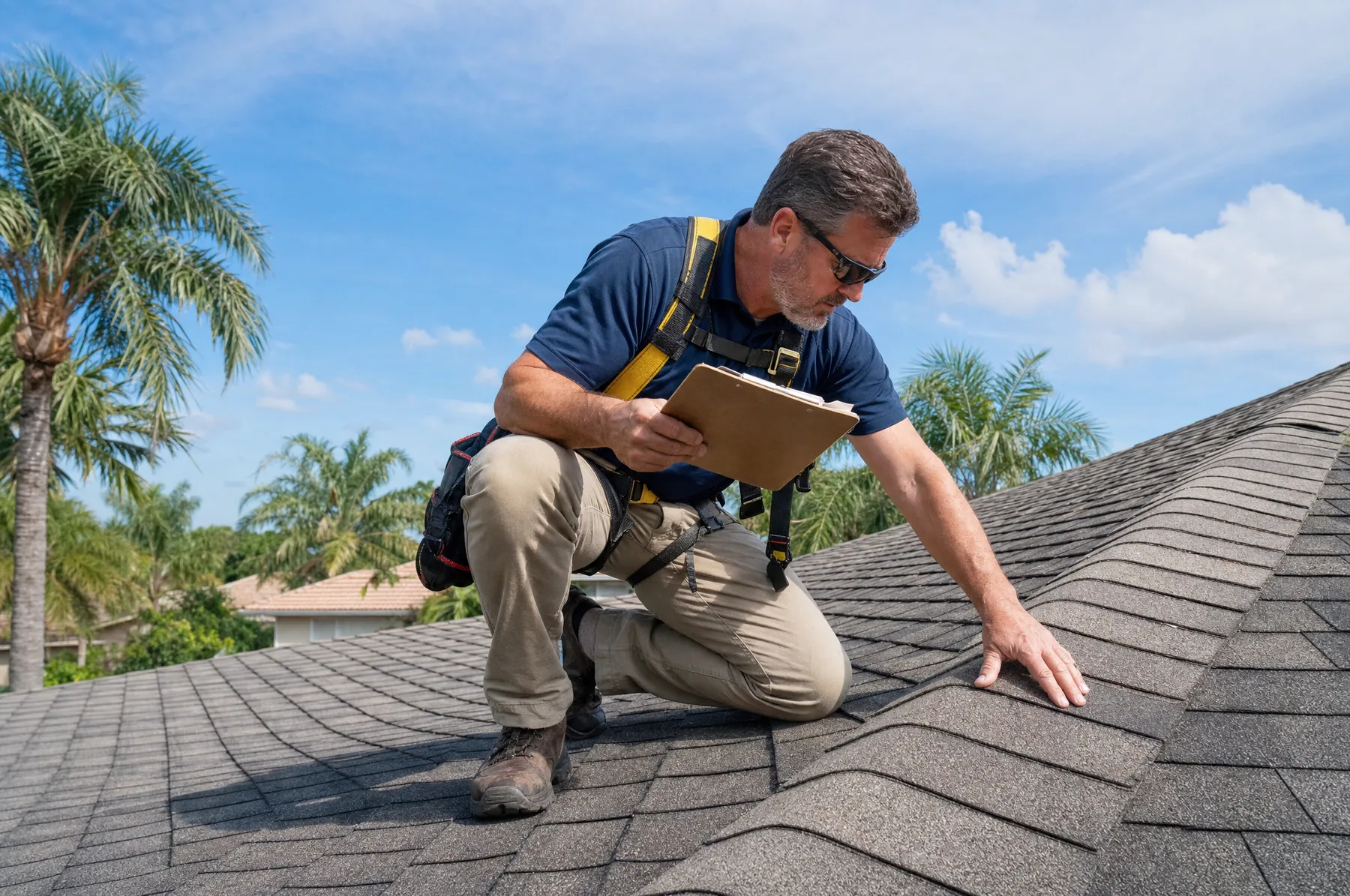
A roof lasts less in Florida than in the rest of the country, and the material decides almost everything: InterNACHI puts asphalt shingles at 20 years (3-tab) and 30 (architectural) under normal conditions, and warns that hot climates drastically shorten them; Florida roofers report 15-25 years. Clay or concrete tile and metal exceed 40. State law adds its own clock: at 15 years the insurer can require an inspection.
How long does each roof type last in Florida?
| Material | National reference (InterNACHI) | Range reported in Florida (local roofers) | What fails first |
|---|---|---|---|
| 3-tab asphalt shingle | 20 years | 12-15 years | Granule loss, lifted edges |
| Architectural asphalt shingle | 30 years | 15-20 years (premium up to 20-25) | Granules, tab sealant |
| Clay / concrete tile | 100+ years (the tile) | 40-50 years; underlayment 20-25 | The membrane under the tile, not the tile |
| Metal (standing seam) | 40-80 years | 40-70 years | Fasteners and seals; the panel almost never |
| Exposed-fastener metal | 40-80 years | 30-45 years | Screw washers |
| Membrane / modified bitumen (flat roof) | 20 years | Shorter in direct sun | Seams and ponding |
Florida ranges come from local roofer guides and are guidance, not a guarantee; the real condition is determined by an inspection. InterNACHI also warns that hurricanes and hail can shorten any lifespan or cause isolated damage.
Why is Florida so hard on roofs?
Five things that do not combine in other states:
- Solar radiation nearly all year, degrading asphalt and sealants.
- Daily thermal cycling: the roof gets very hot by day and cools at night, every day, and the material expands and contracts.
- Constant humidity, feeding algae and mold on the shingles.
- Salt on the coast, corroding exposed metal and fasteners.
- Hurricane wind, lifting tabs and tearing off poorly sealed shingles.
That is why a shingle with a manufacturer’s “30-year warranty” does not last 30 in Florida: the warranty covers product defects, not the climate.
What are the signs a roof is ending?
- Granules in the gutters and areas where the shingle looks smooth or shiny.
- Lifted tabs, curled shingles or shingles brittle to the touch.
- Broken or shifted clay tiles, and above all moisture stains in the attic: a sign the underlayment failed.
- Rust or loose screws on a metal roof.
- Ceiling stains, musty smell in the attic, wet insulation.
- A roofer says “three years left”: with under 5 years of certified useful life, your insurer can decline to renew.
Heads up: the “50-year” clay tile roof is a half-truth. The tile, yes; the membrane underneath, no. When a solar salesperson tells you your 22-year-old tile roof “lasts decades,” they are looking at the tile and not the underlayment, which is what decides whether there is a leak under the panels. You are right to distrust that: have a roofer lift a few tiles and look at the membrane.
What does Florida law say about roof age?
Statute 627.7011 sets two rules. One: an insurer cannot refuse to issue or renew a policy solely because of the age of a roof under 15 years. Two: at 15 years or older, it must allow an inspection by an authorized inspector (at your expense), and if that inspection certifies 5 or more years of remaining useful life, it likewise cannot refuse solely for age. Age is calculated from the last time 100% of the surface was built or replaced. Repairing a section does not reset the clock.
When replacing the roof does NOT make sense yet
- An independent roofer certifies more than 5 years of life and there is no damage: maintain, do not replace.
- It is metal or clay tile with the underlayment in good condition (verified, not assumed).
- The only one saying it must be replaced is the one who will sell it to you: get a second opinion.
- You are waiting for a window in the state My Safe Florida Home program and the roof holds: then waiting is worth it, with an inspection in between.
What roof does the solar subscription require?
A shingle roof with useful life ahead. It is the most common material on homes in Kissimmee, Davenport or Clermont, and also the one that lasts the least in this climate. The subscription does not accept clay or concrete tile, metal or ground-mounted systems.
That does not mean your roof has to be new. It means it gets checked before installation. And if it needs replacing midway through the 3- or 5-year term, the subscription includes 1 removal and reinstallation of the system at no cost per term, with 30 days’ notice. At the end, if you do not renew, the system is removed at no cost, the roof is left sealed, and you get a 10-year roof warranty after the removal.
| Roof type | Qualifies for the subscription? |
|---|---|
| Shingle (asphalt) with useful life left | Yes |
| Shingle at the end of its life | Roof first |
| Clay or concrete tile | No |
| Metal | No |
What to check before you decide
- Date of the last roof permit (your county’s portal) and material type; with that you find your row in the table.
- An inspection with attic photos and, on tile roofs, of the underlayment.
- If you plan to put solar on your roof: EnergySage’s practical rule (asphalt shingle over 10 years, replace first) and our guide roof before solar.
- Status of your wind mitigation form (OIR-B1-1802, valid up to 5 years): a new roof is the moment to renew it.
- How the roof behaves with panels in storm season: read solar and hurricanes in Florida.
Frequently asked questions
Why do asphalt shingles last less in Florida?
How does the law calculate my roof's age?
Does my roof qualify for the solar subscription?
Can I install solar on an 8-year-old roof?
Figures vary by home, usage and bill. Incentives vary by county, income and installation type. Confirm any tax matter with your tax preparer.
Sources
- InterNACHI — Standard Estimated Life Expectancy Chart for Homes
- Coastal Roofing of South Florida — Florida Roof Lifespan Guide (local ranges by material)
- Florida Statutes 627.7011 — 15-year rule and roof age calculation
- EnergySage — Roof replacement with solar panels (asphalt shingle >10 years)
- Florida Office of Insurance Regulation — Wind Mitigation Resources
Keep learning
Your roof
Roof before solar: when to replace it first (Florida 2026)
Panels last 25-30 years; if your asphalt shingle roof is over 10, replace it first. What it costs to remove and reinstall panels, and how Florida's 15-year insurance rule weighs in.
7 min read
Solar energy
Solar and hurricanes in Florida: what panels withstand and what to do
What wind speed panels are designed for in Florida, what the code requires, how your home insurance treats them, and what to do (and not do) before a hurricane.
8 min read
Subscription and other options
Solar energy subscription in Central Florida: the complete 2026 guide
How the My Home Solutions subscription works: you save at least 30%, guaranteed in writing, for 3 or 5 years. Who qualifies, the yearly true-up and when it does not fit.
10 min read
2 minutes · No pressure · Spanish or English
Your Central Florida home could start saving this year.
Tell us about your home in 2 minutes. We review your real bill and tell you how much you would save with the subscription. If it doesn’t make sense for you, we say so.