
Your roof
Roof before solar: when to replace it first (Florida 2026)
Panels last 25-30 years; if your asphalt shingle roof is over 10, replace it first. What it costs to remove and reinstall panels, and how Florida's 15-year insurance rule weighs in.
Written by Yorgan Rojo · Energy advisor, My Home SolutionsUpdated 7 min read
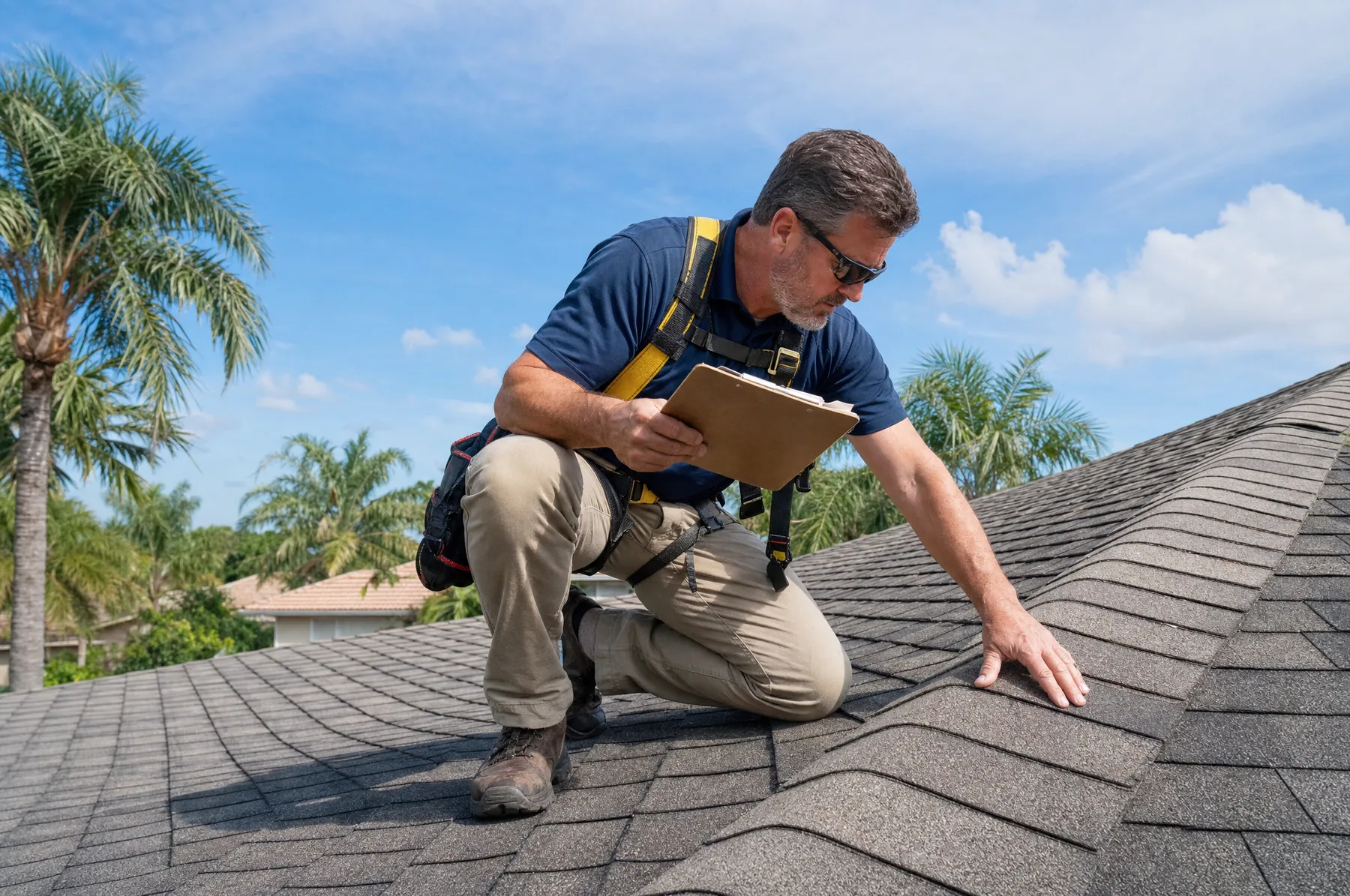
If your asphalt shingle roof is over 10 years old, replace it before putting up panels. Solar systems last 25-30 years per EnergySage, and an old roof will not keep up; removing and reinstalling panels to replace the roof later costs about $200-300 per panel and can exceed $7,000. In Florida the law adds weight: with a roof 15 years or older the insurer can require an inspection, and if it has under 5 years of life left the insurer can decline to renew the policy.
Why does the roof come before the panels?
Three reasons that stack:
- Mismatched lifespans. EnergySage puts panels at 25-30 years and asphalt shingles at about 30 on a national average; InterNACHI warns that hot climates drastically reduce asphalt shingle life. In Florida, a 12-year-old roof has less ahead of it than the panels will last.
- Remove-and-reinstall cost. When the roof fails with panels on top, someone has to remove them, wait for the roofer, and mount them again. EnergySage: about $200-300 per panel, and in total it can exceed $7,000. That money produces zero kWh.
- Insurance. In Florida, statute 627.7011 lets the insurer require an inspection of a roof 15 years or older; if the inspector certifies 5 or more years of useful life, they cannot refuse the policy solely for age. Under 5 years, they can. A roof the insurer will not cover is a roof where you cannot finance panels.
What type of roof do you have and what changes?
| Roof type | Indicative lifespan | What happens with solar |
|---|---|---|
| Asphalt shingle | Shorter in hot climates (InterNACHI); EnergySage: about 30 years nationally | Most common and easiest to penetrate; if over 10 years, replace first (EnergySage) |
| Clay or concrete tile | Can exceed 50 years (EnergySage) | Pricier, more delicate install; the subscription does not accept it, and neither do some installers |
| Metal | Can exceed 50 years (EnergySage) | Excellent base if standing seam (no penetrations) for buyers; the subscription does not accept it |
| Flat / modified bitumen | Shorter (InterNACHI) | Needs ballasted or tilted racking; check load |
Ranges are general guidance from the cited sources; the real condition is decided by an inspection. Details in roof lifespan in Florida.
What does a pre-solar roof inspection check?
- Real age (county roof permit, not the salesperson’s memory).
- Shingle condition: granule loss, lifted edges, soft spots.
- Deck attachment and roof-to-wall connections: the same items a wind mitigation inspection looks at (Florida form OIR-B1-1802, valid up to 5 years).
- Secondary water resistance membrane under the shingles: if missing, a roof replacement is the moment to add it and earn an insurance discount.
- Ventilation and attic condition, including insulation.
Heads up: the solar industry has an incentive to tell you your roof “is fine.” Every month of waiting is a sale going cold. My Home Solutions does not sell roofs, and we gain nothing by installing on a roof that will not last the term. With a 12-year-old roof, the honest answer is almost always “roof first,” even if it means the solar install slips a few months.
What if you go with the solar subscription instead of buying?
The roof still decides. The My Home Solutions subscription, for Central Florida homes, requires a shingle roof with useful life left. It does not accept clay or concrete tile, metal or ground-mounted systems. The roof is checked before installation.
In exchange, the roof risk does not fall on you:
| Situation | With the subscription |
|---|---|
| The roof needs replacing during the 3- or 5-year term | 1 removal and reinstallation of the system at no cost per term, with 30 days’ notice |
| You finish and do not renew | The system is removed at no cost within 30 days |
| After the final removal | The roof is left sealed, with a 10-year roof warranty |
It is one of the few structures where you do not pay to take the system down and put it back. But the included removal is one per term: if your shingle roof is at the end of its life, it still makes sense to replace it before you start.
When replacing the roof first does NOT make sense
- The roof is under 8-10 years old, an independent inspection confirms it and there is no damage: install and move on.
- It is standing seam metal in good condition: it outlasts the panels.
- You will sell the house within two years: a new roof helps the sale, but neither the roof nor the panels pay back in that window.
- The budget does not cover both: do the roof, check whether you qualify for the state My Safe Florida Home program, and leave solar for later. Never the reverse.
What to check before you decide
- Date of the last roof permit on your county’s portal.
- A written report from an independent roofer with estimated years of life and photos.
- Your policy: what the insurer requires on roofs and whether a wind mitigation discount is pending.
- If doing roof and solar together: a single written warranty covering the panel penetrations.
- How the roof-and-panel assembly behaves in storm season: read solar and hurricanes in Florida.
Frequently asked questions
How do I know how old my roof is?
Does the solar installer check the roof?
Can I do roof and solar at the same time?
Figures vary by home, usage and bill. Incentives vary by county, income and installation type. Confirm any tax matter with your tax preparer.
Sources
- EnergySage — Do You Need a Roof Replacement With Solar Panels? ($200-300/panel, >10 years, lifespans)
- Florida Statutes 627.7011 — 15-year rule and 5 years of useful life
- InterNACHI — Standard Estimated Life Expectancy Chart (hot climates shorten asphalt shingle life)
- Florida Office of Insurance Regulation — Wind Mitigation Resources
Keep learning
Solar energy
How many solar panels do I need in Florida? Sizing from your real kWh
How to size a solar system from your kWh, how much a kW produces in Florida, why 400 W panels are the standard, and why designing at 110% of usage makes sense.
8 min read
Your roof
How long a roof lasts in Florida: asphalt shingle, tile and metal
Lifespan of each roof type in Florida's climate, why asphalt shingles last less here than elsewhere, the signs a roof is ending, and what the 15-year law says.
6 min read
Solar energy
Solar and hurricanes in Florida: what panels withstand and what to do
What wind speed panels are designed for in Florida, what the code requires, how your home insurance treats them, and what to do (and not do) before a hurricane.
8 min read
2 minutes · No pressure · Spanish or English
Your Central Florida home could start saving this year.
Tell us about your home in 2 minutes. We review your real bill and tell you how much you would save with the subscription. If it doesn’t make sense for you, we say so.